Pouring a flat industrial concrete slab before deciding between deep-drawn stainless pots and die-cast aluminum frypans is one of the fastest ways to waste civil budget. Heavy hydraulic deep-drawing presses need reinforced foundation pits for lower die cushions, whereas die-casting cells need furnace ventilation, molten metal clearance, and isolated trimming zones.
When importers and regional kitchenware brands set up a cookware production line, civil layout, press selection, and cash flow all hinge on which cookware construction you build first.
Choosing Between the Four Commercial Cookware Routes
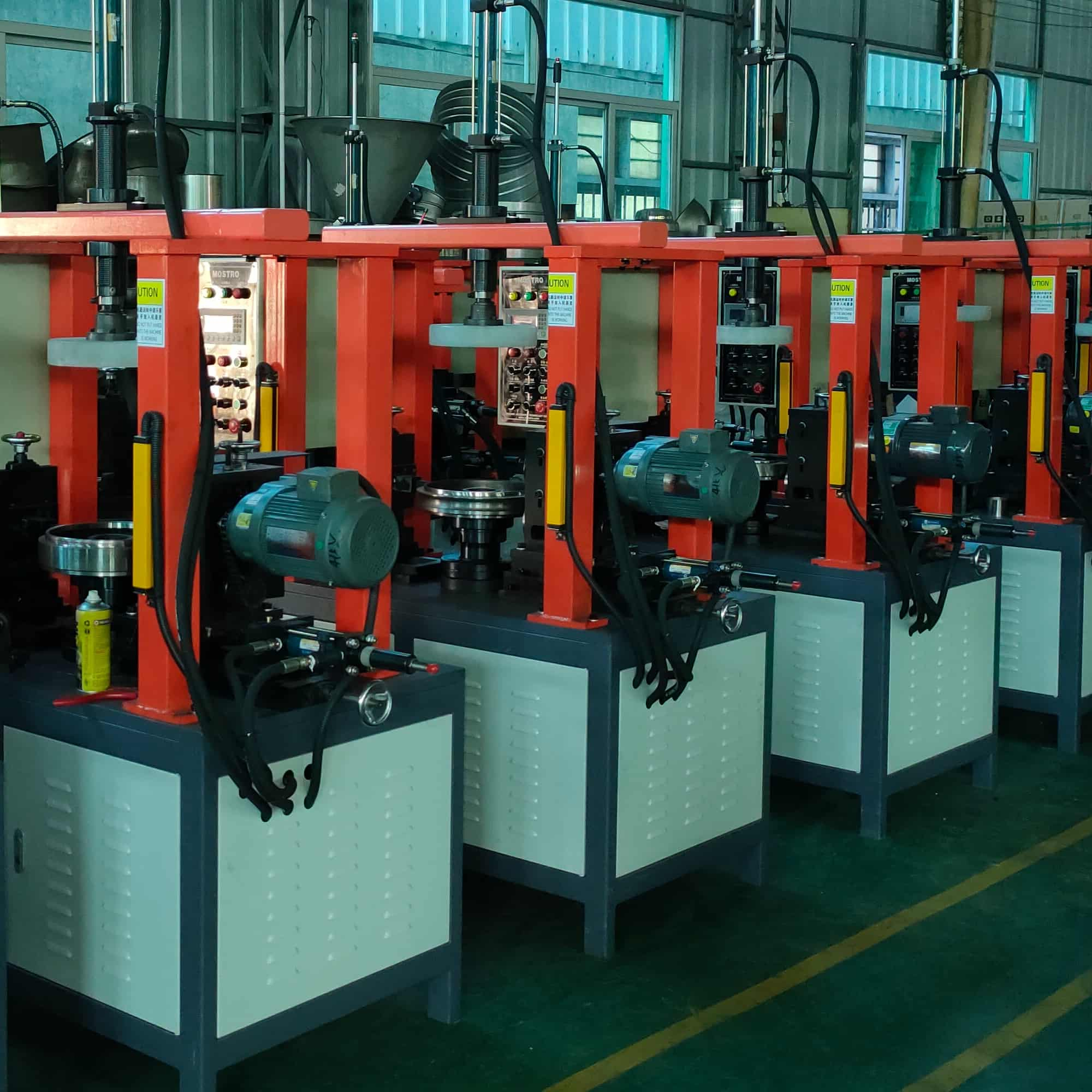
Most commercial cookware plants organize around four manufacturing routes, and each ties up working capital differently. Impact-bonded stainless steel cookware remains the volume backbone for soup pots, saucepans, and casseroles—it is the most forgiving route to start on, and the one most stainless steel cookware production lines are configured around. Single-wall SS304 (or SS430 for cost-driven lines) circles are deep-drawn into shells, trimmed, and fused at the base to an aluminum heat-spreading disc and a magnetic SS430 capsule on high-tonnage friction screw presses or hydraulic impact-bonding presses. Triply clad cookware takes a different approach, starting with pre-bonded three-layer circles (typically SS304 interior, aluminum core, and SS430 exterior) so heat climbs the sidewalls evenly. Because clad blanks are thicker and stiffer than single-wall stainless, a triply cookware production line relies on higher-tonnage hydraulic presses and clean edge rolling or sealing so the exposed aluminum core does not pit in commercial dishwashers.
On the aluminum side, forged or deep-drawn non-stick cookware forms frypans and covered casseroles from heavy-gauge aluminum circles (commonly 3003 or 1050/1060 alloys) on heavy forging or multi-action hydraulic presses, followed by internal sandblasting, multi-coat PTFE or ceramic spraying, curing ovens, and perforated induction-plate bottom punching on a non-stick and forged aluminum cookware line. Die-cast aluminum cookware covers thick-walled grill pans, square roasters, and heavy-base frypans poured from molten ADC12 or A380 alloys on cold-chamber machines—the core cells of a die-casting production line—before moving through trimming presses, CNC base skimming, sandblasting, and coating.
If you are building your first factory from scratch, launching with impact-bonded stainless steel or forged aluminum frypans gets cash flow moving much faster than triply. Raw clad circles typically cost two to three times as much as single-layer stainless blanks, which ties up heavy inventory capital and makes every rejected shell expensive.
Workshop Baselines and Civil Prep Before Signing a Lease
Full-line space, staffing, and hourly throughput vary predictably across the four routes. A standard mid-volume impact-bonded stainless steel line typically requires 1,000 to 1,500 m² of total floor space and 12 to 18 operators across forming, base bonding, polishing, handle assembly, and packing, turning out roughly 150 to 300 pots per hour depending on draw depth, pot diameter, and mirror-polishing passes. Full triply lines require roughly 1,200 to 1,800 m² and 14 to 20 operators to accommodate a larger press bay for higher-tonnage presses and tighter multi-stage draw sequencing—since clad blanks cannot be re-annealed after bonding without melting the aluminum core, whose melting point (≈660 °C) sits far below stainless steel solution-annealing temperatures (≈1,050 °C). Complete forged or drawn non-stick aluminum lines require roughly 1,300 to 2,000 m² and 15 to 22 operators once you include the 300 to 500 m² hall needed for enclosed sandblasting booths, multi-stage spray lines, and curing ovens. Die-cast aluminum plants require roughly 1,100 to 1,700 m² overall (800 to 1,200 m² for melting, cold-chamber casting, and trimming, plus 300 to 500 m² for sandblasting and coating) with 14 to 20 operators and substantially higher electrical transformer demand.
Before locking in a factory building, verify the physical site limits that govern heavy equipment installation. Tall stockpots require long-stroke hydraulic presses, so check clear hook height above the press crown for cylinder maintenance and confirm overhead crane or heavy forklift capacity for swapping multi-ton deep-drawing dies. Hydraulic drawing presses and impact-bonding machines also frequently sit inside reinforced concrete pits so the bolster plate stays at an ergonomic operator height while housing lower die cushions underneath.
Environmental partitioning and utilities matter just as much as floor area. Mirror polishing throws off cotton lint and abrasive compound dust, while non-stick lines generate aluminum oxide blasting grit and curing oven exhaust. Partition polishing and coating rooms away from press lines and final packing so airborne grit does not scratch mirror lids or ruin wet coatings. On the utility side, size main transformers to handle simultaneous hydraulic pump loads, high-frequency induction heaters on bonding lines, melting furnaces, and curing ovens, matched to local three-phase industrial voltage (such as 380–415 V/50 Hz or 440–480 V/60 Hz) alongside dry compressed air for pneumatic feeders and spray guns.
Deep Drawing, Metal Spinning, and Tooling Parameters
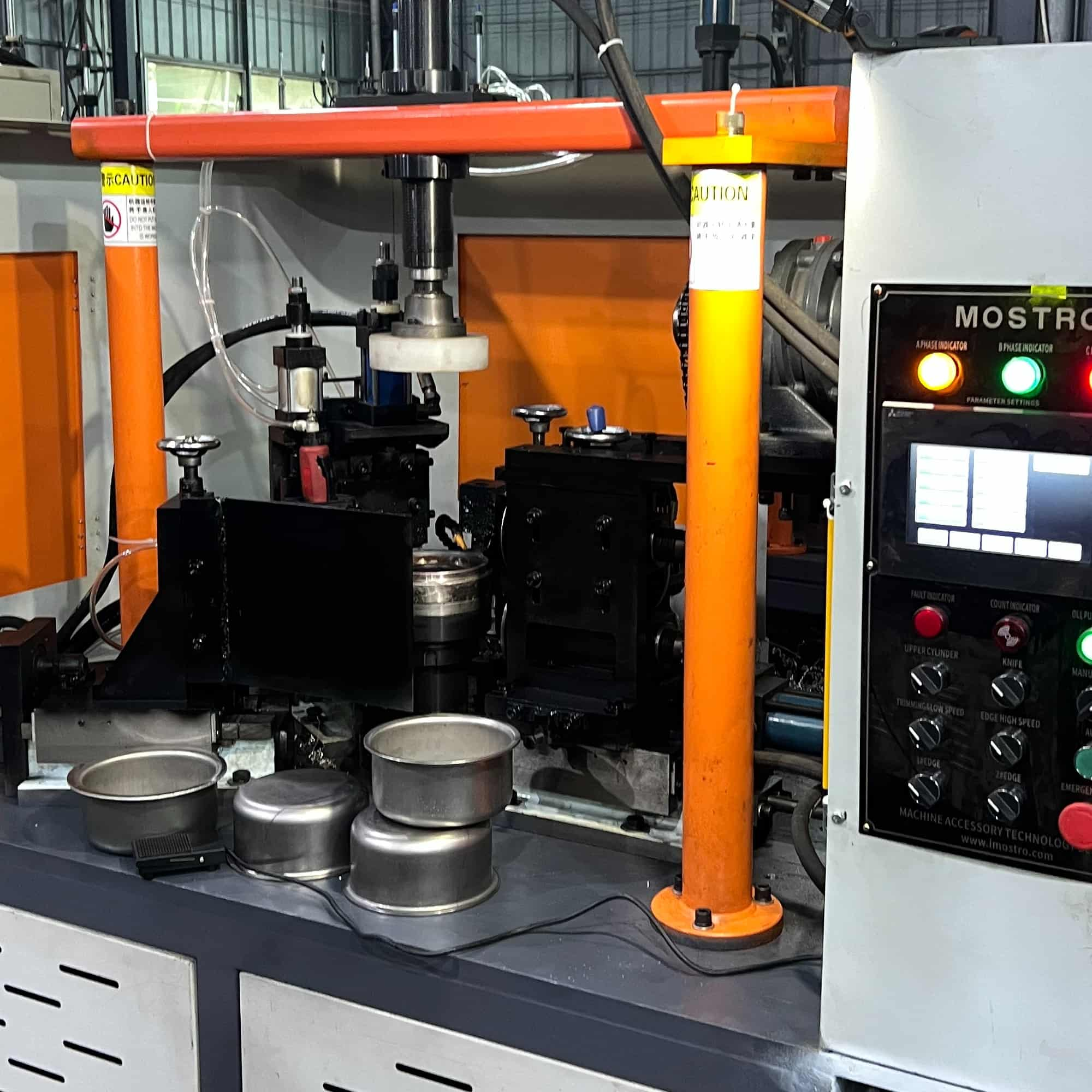
For cylindrical stainless steel and triply pots, blanked circles move through staged hydraulic deep-drawing presses. You cannot pull a tall stockpot in a single stroke without tearing the bottom radius. Shells step through first-draw and redraw dies with blank-holder pressure tuned carefully at each stage—high enough to keep the flange from wrinkling under circumferential compression, yet controlled enough to let metal flow over the die radius without thinning the bottom corner excessively.
Punch-to-die clearance is typically set around 1.1 to 1.2 times the nominal sheet thickness to accommodate natural flange thickening without ironing or galling the sidewall. On single-wall austenitic SS304, rapid work-hardening also causes elastic springback after unloading, which die designers compensate for in the punch profile, and tall single-wall vessels often require intermediate annealing before the final redraw or belly-bulging pass. High-viscosity extreme-pressure (EP) or synthetic drawing lubricants protect the die surface during deep pulls, though every trace of oil—especially any chlorinated formulations—must be thoroughly degreased before annealing or base bonding to avoid carbonized stains, stress-corrosion pitting, or bond voids. When switching between pot diameters on press lines, changing multi-stage deep-drawing dies, blank holders, and trimming tooling typically takes 1 to 3 hours on hydraulic presses equipped with standardized bolster plates, plus adjustments on the base-turning lathe and polishing fixtures, so grouping orders into larger batch runs per diameter protects daily press utilization.
Not every pot body is purely press-drawn. Deep woks, tapered saucepans, and thick-gauge aluminum shells frequently rely on CNC metal spinning after an initial shallow draw, forming smooth curved profiles without building expensive multi-stage matched dies for every diameter.
Base Bonding, Coating, and Shop-Floor Acceptance Checks
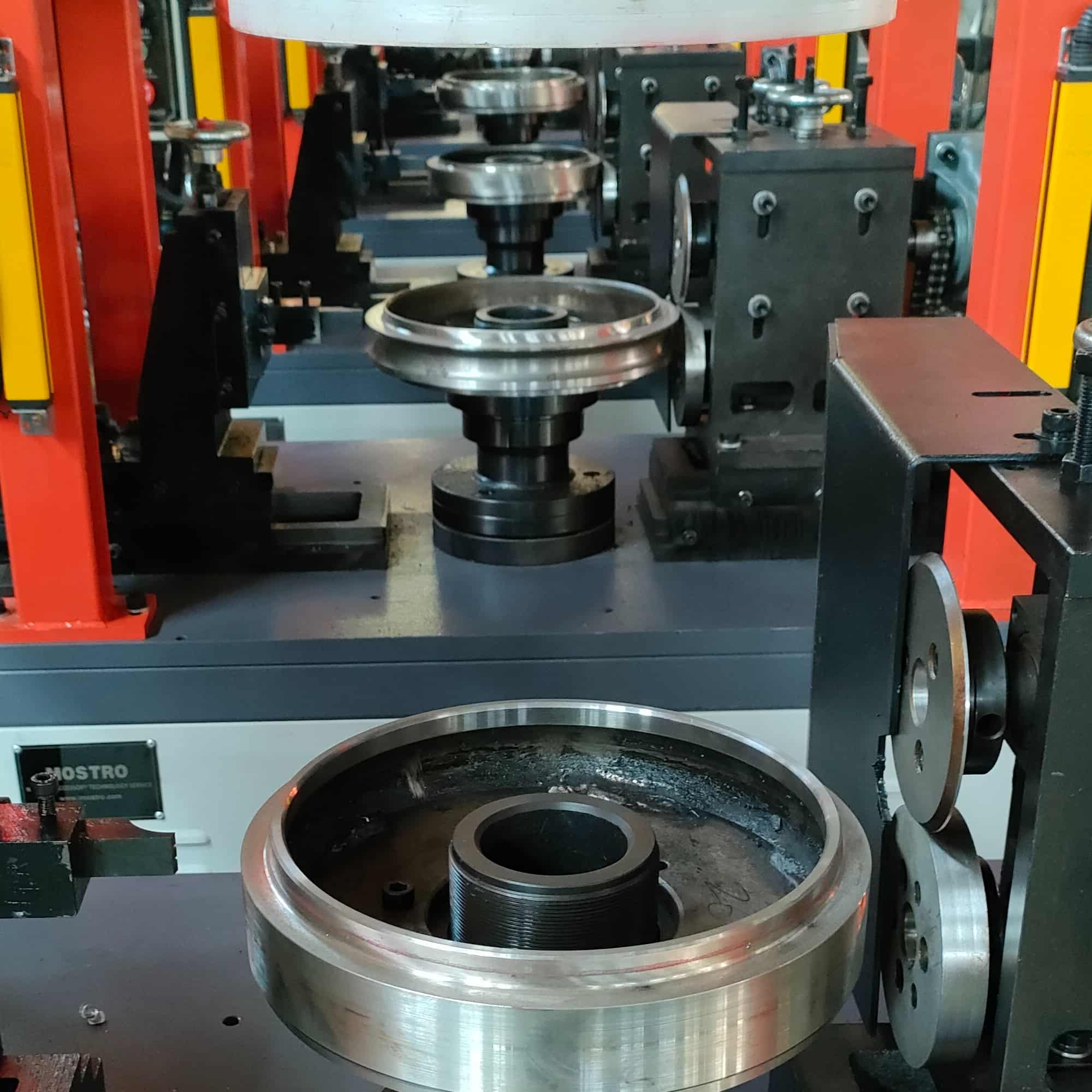
After drawing, trimming machines cut uneven earing off the pot rim and roll a smooth lip or pouring edge. On single-wall stainless pots, the bottom is cleaned, pre-heated, and fused to the aluminum disc and SS430 outer cap under a friction screw press or hydraulic impact-bonding line (or via induction brazing). Any air pocket trapped between layers creates a dead thermal zone that blisters during stove-top use.
To verify composite base integrity during trial runs and daily QC, buyers and plant QA teams rely on four measurable shop-floor checks. First, thermal shock testing heats an empty pot base to 250–300 °C followed by cold-water quenching across multiple cycles, where any popping sound, blistering, or edge separation fails the batch. Second, destructive chisel peel testing or cross-section cutting on sample pots must show metal tearing within the aluminum layer rather than separating cleanly along the steel interface. Third, straightedge and feeler gauge inspections across the cold base should confirm a slight inward concavity—typically 0.1 to 0.4 mm—so the bottom expands flat against the burner when heated. Finally, cross-section grinding or ultrasonic scanning along the perimeter verifies a continuous metallurgical seal with zero open crevices that could trap dishwasher detergent.
For non-stick aluminum and coated triply lines, incoming quality checks focus equally tightly on the cured coating film. Before releasing batches for packing, QA technicians verify dry film thickness (DFT) with eddy-current or magnetic induction gauges against the coating supplier's specification, run cross-hatch grid cuts followed by tape pull-offs to confirm substrate adhesion, check full cure via solvent rub testing (such as MEK rubs) so no uncured resin remains, and run mechanical scouring-pad abrasion cycles alongside boiling salt-water or dishwasher immersion tests to ensure the coating resists early peeling.
Sharing vs. Isolating Equipment Across Multiple Cookware Lines
Factories planning to run multiple cookware categories under one roof can share front-end hydraulic drawing presses, trimming and beading machines, and handle riveting stations across impact-bonded stainless, triply, and forged aluminum lines, provided press tonnage and daylight stroke are sized for the deepest pot and thickest gauge from day one. Die-casting, however, requires its own dedicated cold-chamber melting and casting cell with furnace exhaust and CNC trimming, while impact-bonding presses and base-turning lathes remain dedicated to composite-bottom lines (with light bottom skimming also used on triply and aluminum pans).
Surface finishing and dust extraction must stay strictly separated by material route. Sandblasting booths, PTFE or ceramic spray lines, and curing ovens are dedicated to non-stick aluminum cookware and optional on triply interiors, whereas automatic multi-head side and bottom polishing lines serve stainless steel and triply vessels inside a partitioned room. Never run aluminum and stainless steel through the same polishing wheels, blasting media, or uncleaned die sets—carbon steel and aluminum particles embedded onto stainless surfaces trigger rust spots later, and fine aluminum dust from deburring, grinding, and sandblasting poses a combustible dust explosion hazard that requires dedicated wet scrubbers or explosion-vented dust collectors. Ultrasonic washing lines sit ahead of final packing on stainless lines, and directly ahead of sandblasting and spray coating on aluminum lines, to strip every trace of drawing oil and buffing compound.
Market Access: Machinery vs. Finished Cookware Compliance
Export-oriented cookware plants face two separate regulatory checks, and buyers need both addressed from the project planning stage. On the machinery side, lines are built with mechanical safety guarding, two-hand press controls, emergency stop circuits, enclosed dust and fume extraction, and electrical configurations matched to your local industrial grid (such as 380–415 V/50 Hz or 440–480 V/60 Hz) and technical file requirements.
On the finished cookware side, the production line is configured so regulatory compliance is achievable—through controlled base bonding that passes thermal shock checks, clean rim finishing, thorough degreasing, and calibrated curing oven temperature profiles. The food-contact compliance declaration itself is issued by you as the cookware manufacturer. For bare stainless steel or aluminum cookware, this is backed by mill test certificates (EN 10204 3.1) for food-grade metal alloys, finished-product performance testing to EN 12983-1, and a Declaration of Compliance (DoC) under EU 1935/2004 and/or US FDA requirements, depending on the destination market. For non-stick coated cookware, you will also combine coating-supplier compliance declarations (such as EU 10/2011 or national food-contact rules), PFOA/PFAS restriction verification, and overall migration test reports on finished pans. We supply the process capability and equipment documentation; the product compliance certificate remains with the brand placing the cookware on the market.
Request a Tailored Cookware Line Layout and Equipment List
Send MOSTRO your target cookware catalog (pot diameters, heights, wall gauges, and handle styles), preferred material route (impact-bonded stainless, triply, forged aluminum, or die-cast aluminum), and hourly output target. Our engineers will prepare a customized machine list, workshop layout drawing, and utility requirement sheet within two business days—or review our turnkey cookware production line solutions to compare standard line setups, and explore our stainless steel cutlery production line setup guide if you are expanding into flatware manufacturing alongside pots and pans.